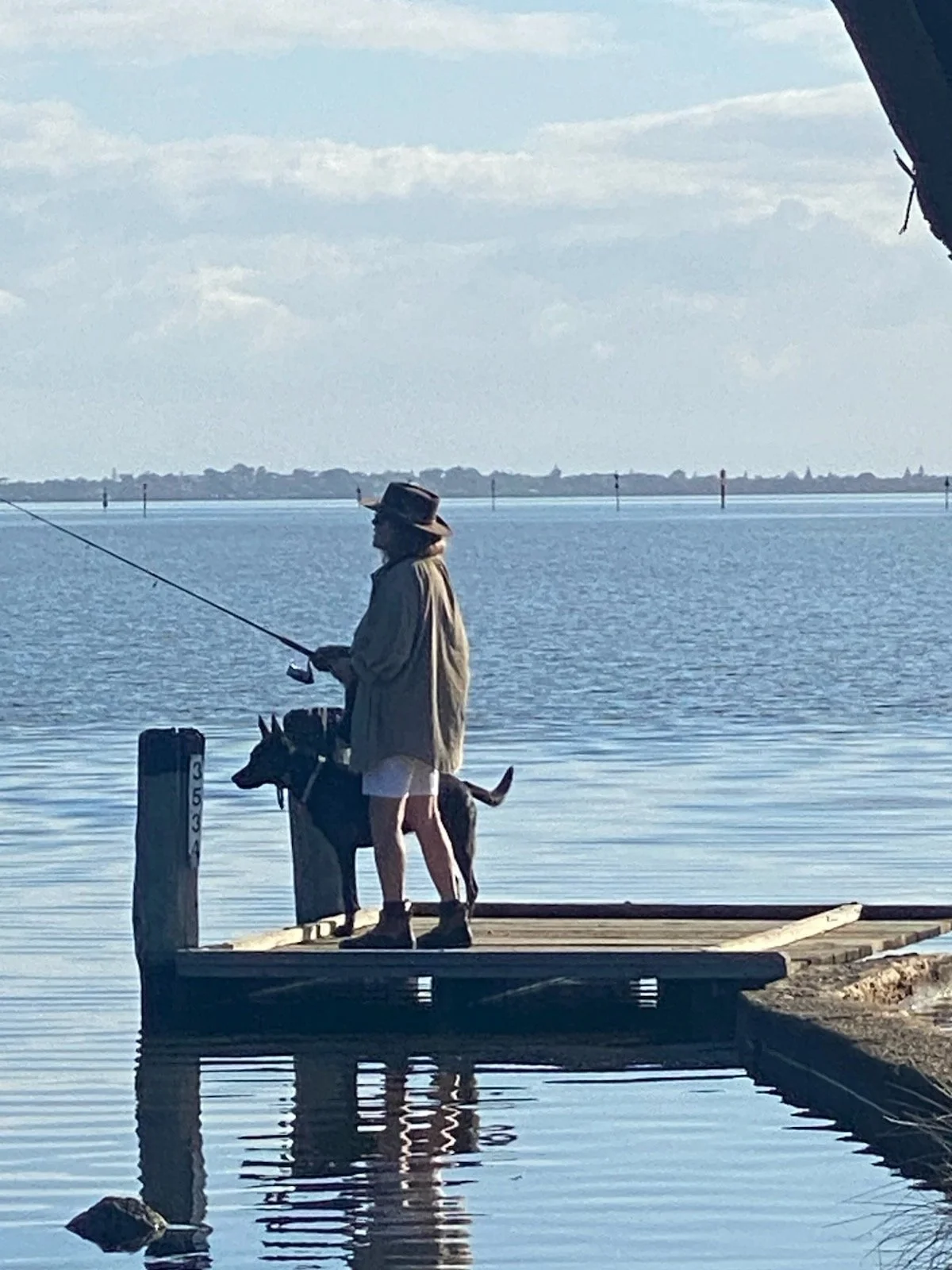
“Surely, after all these years of filing diligently, I should be able to get some definitive answers. … My Australian spouse is 76 years old and is saddled with my IRS woes, which threaten our retirement funds and consume me with fear for the future.”
— Michele, a U.S. citizen who moved from Florida to Australia 40 years ago and now faces uncertainty over her retirement savings.
Dear Congress,
U.S. tax uncertainty threatens our retirement after 40 years in Australia. I moved from Florida to Australia four decades ago and have diligently filed U.S. tax returns ever since. Yet I've spent thousands of dollars on conflicting professional advice about retirement savings, inheritance and reporting requirements. Now, at 68, the financial and emotional toll of citizenship-based taxation is consuming the years my spouse and I should be able to enjoy in retirement.
I am not particularly cyber-savvy, but I've been filing U.S. tax returns diligently throughout my 40 years in Australia. Since FATCA and FBAR became a real concern for me around 2017, the nightmare began.
Because of the lack of clear guidance from the IRS concerning the Australian superannuation retirement system, there is now uncertainty about whether my account is considered a foreign trust requiring Form 3520-A filing or whether proposed regulations under Section 6048 provide an exemption.
The account was funded partially from my spouse's inheritance, and I've had to submit a reasonable-cause statement for failing to file a Form 3520 foreign gift report in 2023. (There is no equivalent filing requirement in Australia for funds received from a spouse for whatever purpose.)
Conflicting advice about retirement savings
One tax agent tells me that any distributions from my retirement account are very likely to be taxed by the IRS under the outdated U.S.-Australia tax treaty, through Article 18 and the saving clause therein. Another says drawing down on the account is another reporting event. Yet another maintains that the treaty exempts me from having to report the account altogether.
I've also been told that should I receive any death benefit from my spouse's superannuation fund, I will be taxed on that benefit by the United States.
I have also discovered that should my spouse pass away before me and I be forced to sell the home we bought in 1989 to afford residential nursing care, I will face U.S. capital gains tax on any taxable gain above the $250,000 home-sale exclusion. I understand the tax rate could be 15% to 20%, even though I would owe nothing to the Australian Taxation Office (ATO) on the sale. (The median house price in Perth is currently A$965,000!)
Why should our home here in Australia since 1989 be subject to U.S. capital gains tax when it is exempt here? The long arm of the IRS is very ugly and intrusive indeed.
The amazing thing is, I didn't realize any of this until recently. I never gave it any thought because it's inconceivable! At one stage, we were even thinking of buying an investment property. God forbid!
I am left in limbo, as distributions from these retirement accounts are entirely tax-free here in Australia.
My mother is 91 years old, and I've just returned from the States, where I removed myself from her living trust, as beneficiary of her Roth IRA (a foreign trust according to the Australian Taxation Office) and as beneficiary of other assets, leaving everything to my sister, who has struggles of her own, to deal with.
Thousands spent, no definitive answers
I have just signed my U.S. tax return at the 11th hour, after 25 email exchanges with my U.S. CPA starting at 4 a.m. on the eve of the extended filing deadline. I've spent thousands of dollars only to receive conflicting advice from tax agents here and in the United States, and I haven't really slept in five days. I find the treatment of expats by the U.S. system just unconscionable, outrageous and frankly unbelievable!
And just to add to the nightmare, I've contacted yet another firm (Tax for Expats) in my search for someone who can provide some definitive answers. Before I even begin drawing down on my AustralianSuper retirement account, I need to establish whether it is considered a foreign trust, whether Forms 3520 and 3520-A are required and how any distributions will be taxed. I've asked for a written U.S. tax opinion to clarify my position. (My FBAR and Form 8938 filings have already been completed.)
In addition, I'm still trying to figure out what awaits should I become a reversionary beneficiary of my spouse's superannuation (my spouse is not in good health). I've yet to take any distributions from my own account, and I simply want to know what the IRS expects of me before I do. Surely, after all these years of filing diligently, I should be able to get some definitive answers.
Like Christian, whose letter inspired me to share my experience, I valued my U.S. citizenship and grew up with my hand on my heart, pledging “allegiance to the flag.” But I am in no position to renounce. Given my mother's estate, my own Roth IRA and assets in the United States, the financial consequences would be devastating.
I've listened to countless podcasts and read so much on this issue, none of which seems to point to any positive outcome for my particular situation.
Much of the information available on this subject is way over my head and, frankly, intimidating. There are so many intelligent and informed people discussing these issues, and I don't consider myself nearly as knowledgeable as they are. Nevertheless, I was moved by Christian's letter and felt compelled to share even a fraction of what I'm experiencing.
Citizenship-based taxation is a draconian measure and is quite literally destroying what years we have left, already impacted by health issues.
My Australian spouse is 76 years old and is saddled with my IRS woes, which threaten our retirement funds and consume me with fear for the future.
I sincerely hope Congress will address citizenship-based taxation before more of us are forced to spend our remaining retirement years in this state of financial uncertainty and fear.
My sincere thanks for listening.
Sincerely,
Michele in Australia